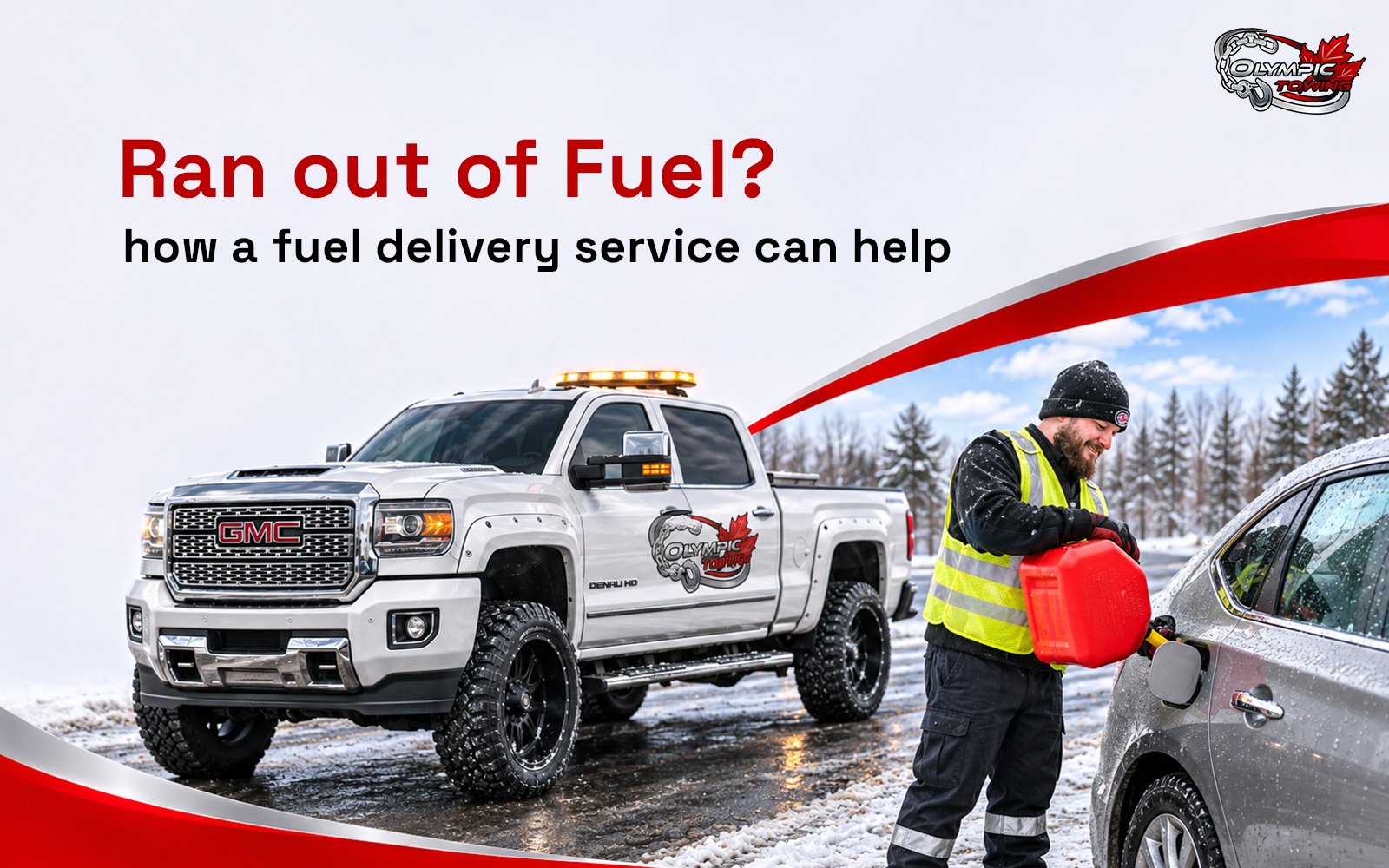
The engine coughs, the car slows, and you're coasting toward the shoulder with traffic rushing past. It happens to careful drivers too, and it's rarely as bad as it feels at the moment. A fuel delivery service brings fuel to your vehicle so you can restart it and get to a station, often without needing a tow.
If you ran out of fuel, move to the safest spot you can, turn on your hazard lights and call for help. A fuel delivery service brings fuel to your exact location so you can restart and drive to a station. Olympic Towing, a towing company in Bolton, Ontario serving Peel and York Region, also provides 24/7 roadside assistance in Bolton.
Why Drivers Run Out of Fuel
Most drivers run out of fuel because of ordinary life, not carelessness. A trip takes longer than planned, the gauge reads a bit optimistic, or you meant to fill up on the way home and then didn't.
Stop-and-go traffic is a big one. A crawl on Highway 410 or a backed-up stretch of Highway 50 near Bolton burns fuel without covering much distance, and a quarter tank can disappear faster than you'd expect.
Borrowed vehicles catch people out too, and so do work vans that get passed between drivers. In winter, cold weather and idling to keep warm use more fuel than a normal drive. If you've ran out of gas, you're in very good company.
What to Do When Your Vehicle Runs Out of Fuel
Get yourself and your passengers safe first, then make the call. Here's the order that works best:
- Coast to the safest spot. Aim for the right shoulder or a parking lot, as far from moving traffic as you can get.
- Turn on your hazard lights as soon as you know the engine is dying.
- Stay put, and stay buckled in if you're on a fast road. On a busy highway, sitting in the car with your seatbelt on is usually safer than standing beside it.
- Call for help. Use your phone's location sharing or note the nearest exit, cross street or landmark.
- Don't walk to a station along the highway. It's risky, and you'd leave your vehicle and any passengers behind.
If you ever feel you're in immediate danger, call 911 first. Fuel can wait.
How a Fuel Delivery Service Works
A fuel delivery service sends a driver with fuel to wherever your vehicle is stopped, so you don't have to leave it. You'll also hear it called an emergency fuel delivery service or roadside fuel delivery, and it's one of the most common reasons people call for help.
Here's how it usually goes:
- You call and tell the dispatcher where you are and what you're driving.
- You say whether your vehicle takes gasoline or diesel. This matters a lot, so double-check before you answer.
- A driver is sent to you, adds fuel to your tank and helps you get started again.
- You drive to the nearest station and fill up properly.
The delivery is meant to get you moving again, not to fill your tank to the top.
What to Expect When Requesting Fuel Delivery
If you've never used fuel delivery assistance before, expect a few clear questions, a quote before anyone is dispatched, and an estimated arrival time. Olympic Towing is known for honest, transparent quotes, so ask for the price up front and you shouldn't be surprised later.
What to Have Ready When You Call
- Your exact location: the nearest cross street, highway exit, landmark or a shared map pin.
- Vehicle type: car, SUV, van, pickup or box truck, plus make and model if you know it.
- Fuel type: gasoline or diesel.
- Where you're headed: this helps if a tow turns out to be needed.
- Keys and access: keys with you, and whether the fuel door opens without a key or code.
- Anything unusual: damage, a fuel smell, or whether you're in a live lane.
- A phone number that stays on and charged.
Safety Tips While Waiting for Fuel Delivery
Waiting is the hard part, especially with kids in the car. A few simple habits make it safer and calmer.
- Keep hazard lights on the whole time, day or night.
- Keep children and passengers inside the vehicle, away from traffic.
- Stay out of the lane edge, and never stand between your car and the road.
- Look for a marked truck with the company name when help arrives.
- In winter, wear your coat and keep a blanket handy, because the cabin cools quickly with the engine off.
Ontario's Move Over law requires drivers to slow down and, when it's safe, move over for stopped emergency vehicles and tow trucks with flashing lights. Not every driver does, so keep your distance from the travelled lanes when the truck arrives.
When Fuel Delivery Is Enough and When Towing Is Needed
Fuel delivery is enough when the tank simply ran dry and nothing else is wrong. If the vehicle starts after fuel is added, you're done and can drive to a station.
A tow is the better choice in a few situations:
- The engine won't restart after fueling. There may be an air or fuel system problem, and some diesel engines need extra attention after running dry.
- The wrong fuel went in. Don't start the engine. Call for a tow instead.
- You can smell fuel or see a puddle. A leak needs a repair shop, not more fuel.
- There's been a collision or damage.
- Your spot isn't safe, and moving the vehicle is the safest answer.
If a tow is needed, the right truck matters. Light duty towing covers cars, SUVs and small pickups. Medium duty towing covers larger vehicles such as delivery vans and box trucks. Heavy duty towing covers the biggest commercial trucks. Fleet managers can save time by telling the dispatcher the exact vehicle type on the first call.
Getting Roadside Help After Running Out of Fuel
Call one number, explain what happened, and let the dispatcher work out whether you need fuel, a tow or both. That's the whole point of out of fuel roadside assistance and of fuel delivery for stranded drivers, and it takes the guesswork off you. A single call to an emergency roadside fuel service can also lead to a tow if it turns out you need one.
Check whether your insurance or a membership plan already includes emergency roadside assistance, since many do. If you're not covered, or you'd rather call a local company, Olympic Towing is available 24/7 and operating since 2015 in Peel and York Region, including Bolton, Brampton, Mississauga and Vaughan.
Why Local Knowledge Matters When Choosing a Towing Company
A local company gets to you faster because it already knows the roads. Olympic Towing is based at 159 Industrial Road in Bolton, so the dispatcher can picture Highway 50, the 410 and the side roads around Peel and York without guessing.
Local knowledge helps in rush hour too. A driver who works these roads every day knows where traffic backs up and which routes clear first, and that helps with fuel delivery service in Bolton, roadside assistance in Bolton and nearby cities.
Choose a company that's licensed, insured, honest about pricing and happy to answer questions before it dispatches anyone.
Frequently Asked Questions
How does emergency fuel delivery work?
Emergency fuel delivery means a driver brings fuel to your stopped vehicle. You call, share your location and fuel type, get a quote, and the driver adds fuel so you can restart and reach a station.
How much does fuel delivery cost?
The price depends on the situation, so ask for a quote before a driver is sent.
How long will roadside fuel delivery take?
It depends on where you are, the time of day and traffic. The dispatcher will give you an estimate when you call.
Can you deliver diesel as well as gasoline?
Tell the dispatcher your fuel type when you call to confirm the available fuel delivery options.
Should I call a tow truck instead of fuel delivery?
Call for fuel delivery if you simply ran out. Call for a tow if the engine won't restart after fueling, the wrong fuel went in, or there's damage or a leak.
Need Help Right Now? Call Olympic Towing
If you've ran out of fuel in Bolton, Brampton, Mississauga or Vaughan, take a breath, get safe and give us a call at 416-356-2900. We're a towing company in Bolton, Ontario serving Peel and York Region, and we answer 24/7. If you'd like pricing before you need it, you can also get a quote here.


